


In November 2022, advertisers began leaving Twitter after Elon Musk acquired the platform. Major brands paused spending. Civil society groups warned about moderation failures. Journalists focused on chaotic layoffs and public disputes happening directly on the platform itself.
At the same time, something stranger was happening underneath the visible crisis.
Even while Twitter’s advertising business deteriorated, Elon Musk power over information cycles expanded dramatically. Government officials responded to his posts publicly. Financial markets reacted to statements made in real time. Journalists reorganized coverage priorities around his activity. Competitors adapted platform features in response to his decisions. Political actors across countries increasingly treated his feed as a strategic communications channel.
Most CEOs avoid becoming the story because visibility introduces operational risk. Musk appeared to be doing the opposite: converting visibility into leverage.
Publicly, the story was framed as a billionaire behaving impulsively after buying a social media company. But that interpretation missed the larger structural shift underway. Musk was not simply using attention for branding. He was using sustained public attention as a coordination mechanism across industries, governments, markets, media systems, and consumer behavior.
That distinction matters because branding can increase awareness. Strategic attention changes institutional behavior.
The difference became especially visible once Musk’s companies stopped operating like isolated businesses and started functioning as interconnected nodes inside larger systems.
The common public narrative treats Musk as a celebrity entrepreneur who happens to run several companies simultaneously: Tesla, SpaceX, Neuralink, The Boring Company, and later xAI. Media coverage often reinforces this framing because it simplifies storytelling around personality, genius, or controversy.
Operationally, though, the more revealing pattern is how these companies reinforce one another institutionally.
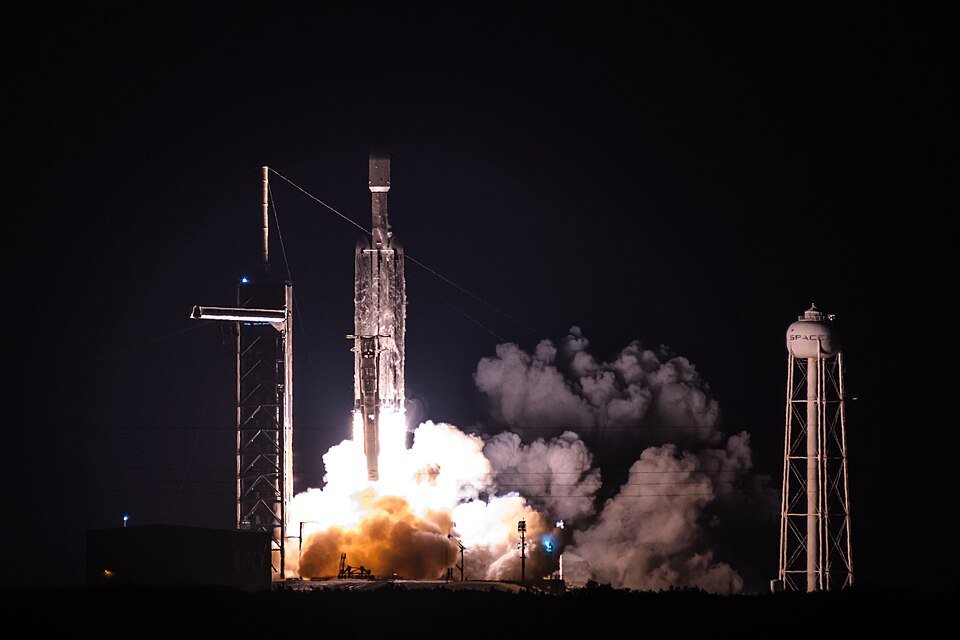
Tesla is not just an automaker competing on vehicle sales. Its valuation historically depended on future narratives around autonomy, energy infrastructure, AI capability, manufacturing scale, and robotics. SpaceX is not merely a launch provider; it increasingly functions as communications infrastructure through Starlink. X is not only a social platform; it provides Musk direct distribution without media intermediaries. xAI enters the AI infrastructure race partly through access to distribution, computing ambitions, and platform integration.
These systems amplify one another through attention flows.
When Tesla launched products in earlier years, the company benefited from extraordinary unpaid media exposure compared to traditional automakers that spent billions annually on advertising. Musk himself often acted as the distribution layer. Product reveals became global media events without relying entirely on conventional marketing systems.
That attention produced secondary effects beyond consumer awareness.
Retail investors formed unusually emotional relationships with Tesla’s stock. Online communities became quasi-volunteer promotional networks. News organizations discovered that Musk-related coverage consistently generated traffic. Financial television increasingly treated his statements as market-moving events. Social platforms amplified conflict and unpredictability because engagement systems reward volatility.
Eventually, Musk stopped operating merely inside media systems and started influencing the incentives of the systems themselves.
This partly explains why criticism often fails to reduce his visibility. In many cases, it expands it.
Traditional reputation theory assumes controversy weakens institutional legitimacy. But platform-era visibility systems behave differently. Outrage frequently increases algorithmic distribution, media attention, and public familiarity simultaneously. The negative attention still strengthens network centrality.
That does not mean criticism is irrelevant. It means the mechanics changed.
This became particularly visible during Tesla’s rise. Traditional automotive analysts often evaluated the company using standard manufacturing metrics: production efficiency, margins, delivery targets, execution risk. Those metrics mattered. But they did not fully explain Tesla’s market behavior.
Tesla increasingly behaved like a hybrid between a car company, technology platform, financial narrative, environmental symbol, and retail-investor movement.
That hybrid structure created unusual resilience. Supporters were not merely customers. Many became participants in a broader ideological and financial narrative around the future. The company benefited from a level of public emotional investment rarely seen in industrial manufacturing.
Critics frequently interpreted this as irrational hype. Some of it probably was. But dismissing it entirely overlooked how modern market systems increasingly reward narrative dominance alongside operational performance.
Institutional capital noticed this too.
By 2020 and 2021, Tesla’s valuation dramatically exceeded traditional automakers despite lower vehicle output relative to giants like Toyota or Volkswagen Group. Investors were not only pricing current manufacturing. They were pricing perceived future system control: batteries, software updates, charging networks, autonomous driving, energy storage, AI training data, and robotics potential.
Attention functioned as a valuation multiplier because it shaped expectations about future dominance.
This is where Musk’s role becomes structurally unusual.
Most CEOs manage organizations. Musk increasingly manages narrative environments around organizations.
That sounds superficial until you examine how modern institutions actually coordinate behavior.
Markets operate partly on expectations. Politics operates partly on perception. Media operates partly on attention scarcity. Consumer behavior increasingly follows visibility architectures created by platforms. In that environment, controlling sustained public attention becomes economically consequential.
Musk understood earlier than many executives that visibility itself was becoming infrastructure.
That realization partly explains why he treated Twitter differently than most acquisition targets. From a conventional financial perspective, the acquisition looked destructive. Advertising revenue reportedly fell sharply after the takeover. Debt pressure increased. Brand relationships deteriorated. Platform instability became visible publicly. Many analysts treated the purchase as evidence of impulsiveness or ego.
But the acquisition also removed dependency on external distribution systems.
Before owning Twitter, Musk relied on platforms owned by others. After the acquisition, he controlled one directly. That distinction matters strategically, especially during political, regulatory, or reputational conflict.
Owning distribution changes institutional positioning.
Historically, powerful industrialists often depended on newspapers, broadcasters, or political alliances to shape public narratives. Musk collapsed multiple roles together: owner, executive, public personality, and distribution operator.
That creates enormous risks. It also creates unusual leverage.
Governments now interact with Musk across multiple domains simultaneously: defense-related satellite infrastructure through SpaceX, electric vehicle policy through Tesla, AI discussions through xAI, speech debates through X, manufacturing employment, energy transition politics, and communications infrastructure.

The Ukraine war exposed this complexity publicly.
Starlink became operationally significant for Ukrainian communications after Russian attacks damaged infrastructure. Governments relied on privately controlled satellite systems during an active geopolitical conflict. Later disputes over service limitations and battlefield usage raised uncomfortable questions: how much strategic influence should private infrastructure operators possess during war?
The situation complicated both criticism and support.
Musk’s companies were helping maintain connectivity under extraordinary circumstances. At the same time, reliance on privately controlled systems introduced geopolitical dependency concerns that governments traditionally try to avoid.
The episode revealed a broader structural transition underway across technology industries.
Private companies are increasingly operating infrastructure layers once associated primarily with states: communications, launch systems, AI compute, digital payments, satellite networks, cloud architecture, and information distribution.
Musk did not create this transition alone. But he became one of its clearest embodiments because of how publicly visible the process became around him.
The common interpretation of Musk as simply “controversial” also obscures how useful unpredictability can become inside media systems.
Traditional corporations optimize for stability. Public companies usually minimize executive volatility because markets dislike uncertainty. Communications departments exist partly to reduce reputational unpredictability.
Musk often behaves oppositely.
That approach clearly creates operational damage at times. Regulatory investigations increased. Lawsuits emerged. Advertisers withdrew. Tesla shareholders periodically worried about distraction risk. Employees across companies described instability and exhaustion.
Yet unpredictability also maintains continuous media gravity.
News systems reward novelty. Platforms reward engagement intensity. Financial media rewards volatility because volatility increases audience attention. Musk became exceptionally difficult to ignore because his actions consistently disrupted normal institutional behavior patterns.
Importantly, this does not mean all disruption was strategic planning. Some decisions appear genuinely impulsive or reactive. Treating every outcome as master-level orchestration becomes analytically weak very quickly.
But institutions still adapt around repeated behavioral patterns regardless of intent.
Media organizations allocate disproportionate coverage resources toward Musk because audience demand exists. Politicians publicly respond because his platforms and companies influence large voter blocs and industries. Competitors imitate tactics because attention increasingly affects capital access and recruiting power.
This produces a feedback loop.
Visibility increases institutional responsiveness. Institutional responsiveness increases perceived importance. Perceived importance increases coverage. Coverage increases visibility again.
Over time, the individual becomes difficult to separate from the systems reacting to them.
There is another contradiction here that complicates simplistic narratives about power concentration.
Musk’s visibility has simultaneously weakened and strengthened institutional gatekeeping.
On one side, platforms like X allowed direct communication outside traditional media filtering. Retail investors gained access to information flows once dominated by institutional intermediaries. Smaller creators and independent commentators benefited from more open distribution structures online generally.
On the other side, the collapse of intermediaries also concentrated influence around individuals with massive existing visibility. Attention systems marketed as democratizing often become highly centralized around a small number of dominant nodes.
The creator economy demonstrates this paradox constantly. Lower barriers to entry increased participation while algorithmic systems concentrated extreme visibility among relatively few accounts.
Musk operates unusually well inside that environment because he combines multiple amplification advantages simultaneously: wealth, platform ownership, controversy generation, industrial relevance, political significance, technological ambition, and direct audience access.
Very few executives possess all those layers at once.
The result is that Musk increasingly functions less like a traditional CEO and more like a high-frequency institutional actor moving across sectors continuously.
That distinction matters because CEOs are usually evaluated primarily on company performance. Institutional actors influence coordination across markets, governments, media systems, and public perception simultaneously.
At times, this influence produces genuine industrial acceleration. Tesla undeniably forced legacy automakers to treat electric vehicles more seriously. SpaceX dramatically reduced launch costs and altered aerospace economics. Starlink expanded satellite internet deployment speed beyond what many expected.
Ignoring those outcomes because of personality conflicts would be analytically dishonest.
At the same time, excessive concentration around singular figures introduces fragility.
When systems become dependent on highly centralized personalities, governance weakens. Decision-making becomes harder to separate from emotional volatility. Institutions increasingly react to individuals rather than stable frameworks. Public attention itself starts distorting resource allocation.
Some investors, regulators, and political actors are already adjusting to this reality. Governments are expanding industrial policy around semiconductors, energy, AI, and communications infrastructure partly because reliance on private technological concentration has become strategically uncomfortable.
But there is no clean reversal available.
Modern visibility systems reward centralization naturally. Platforms amplify recognizable figures. Financial markets reward narrative momentum. Media economics prioritize engagement concentration. Audiences increasingly organize around personalities rather than institutions.
Musk did not invent those dynamics. He learned to operate inside them unusually aggressively.
That may be the most important distinction.
The public often discusses Musk as though he is primarily changing industries through invention alone. But his larger significance may come from revealing how power itself is evolving in digitally mediated systems.
Industrial influence used to depend heavily on ownership of factories, supply chains, or natural resources. Those still matter. SpaceX rockets still require manufacturing. Tesla still depends on lithium, batteries, factories, and logistics.
But increasingly, strategic power also depends on controlling perception flows at scale while remaining embedded in critical infrastructure simultaneously.
Most institutions still treat those domains separately.
Musk behaves as though they are already fused together.
