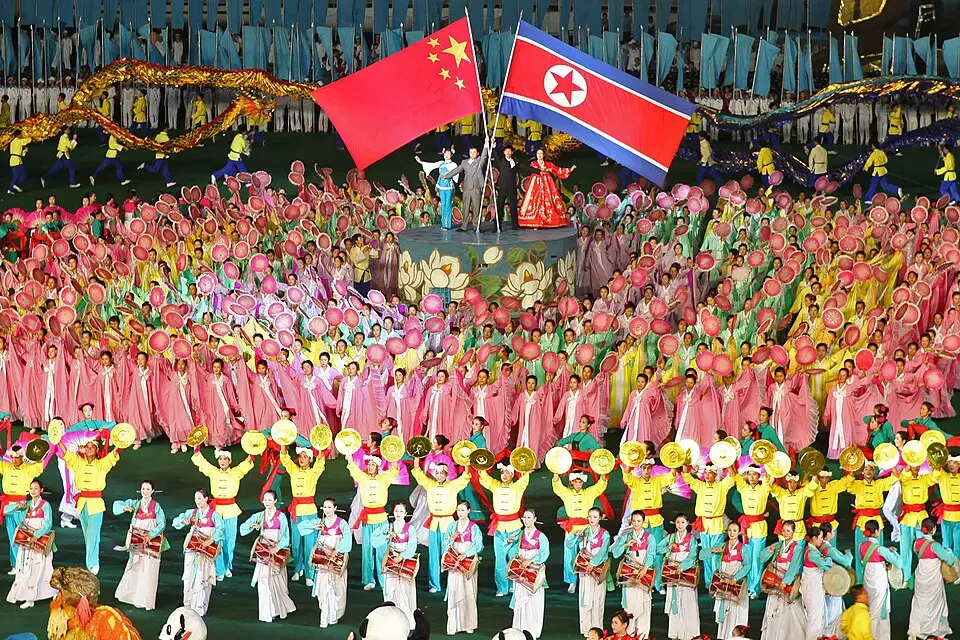
When Xi Jinping told Kim Jong Un that China and North Korea should maintain regional peace, it sounded like the kind of diplomatic line that usually passes without attention. The kind of statement that exists more for record than for meaning.
But in East Asia, that language rarely exists at surface level.
“Peace” in this context is not about resolution or harmony. It is closer to a boundary condition — a way of saying things should not move beyond a controllable range of instability.
The relationship between China and North Korea has never really been about solving the North Korea question. It has been about managing it in a way that keeps it contained but still useful within the regional balance.
If North Korea became fully stable, it would remove leverage and strategic ambiguity. If it became fully unstable, it would create spillover risks that affect every actor in the region. So what remains is an uncomfortable middle state where instability is allowed to exist, but only within limits that do not threaten the broader structure.
That is why North Korea continues to function less like a “problem” and more like a fixed point in the system. For China, it remains a buffer near sensitive borders, a recurring variable in negotiations with the United States, and a pressure point that influences how other regional actors position themselves. None of these roles depend on resolution. They depend on controlled unpredictability.
Seen in that light, Xi’s use of the phrase “maintain regional peace” is less instruction and more calibration. It signals that escalation should not cross certain thresholds, that the current balance should not be disrupted, and that communication channels must remain stable enough to avoid surprises. It is not about changing the structure. It is about preventing it from drifting.
Modern geopolitics often does not operate in clean categories like peace or conflict. It operates in managed states where tension is allowed, competition is bounded, and uncertainty is contained rather than removed. That is why regions like East Asia can appear stable on the surface even while friction remains constant underneath.
The mistake is to read diplomatic language as if it directly describes intent. In most cases, it describes limits.
“Maintain regional peace” is not a vision of harmony. It is a reminder of where the edges are — and what happens if those edges are crossed.