


Why Privacy Has Become the New Luxury
Why privacy has become the most expensive thing money can buy.
A centuy ago, the richest people in the world spent fortunes to be noticed. Today, the richest people in the world spend fortunes to disappear.

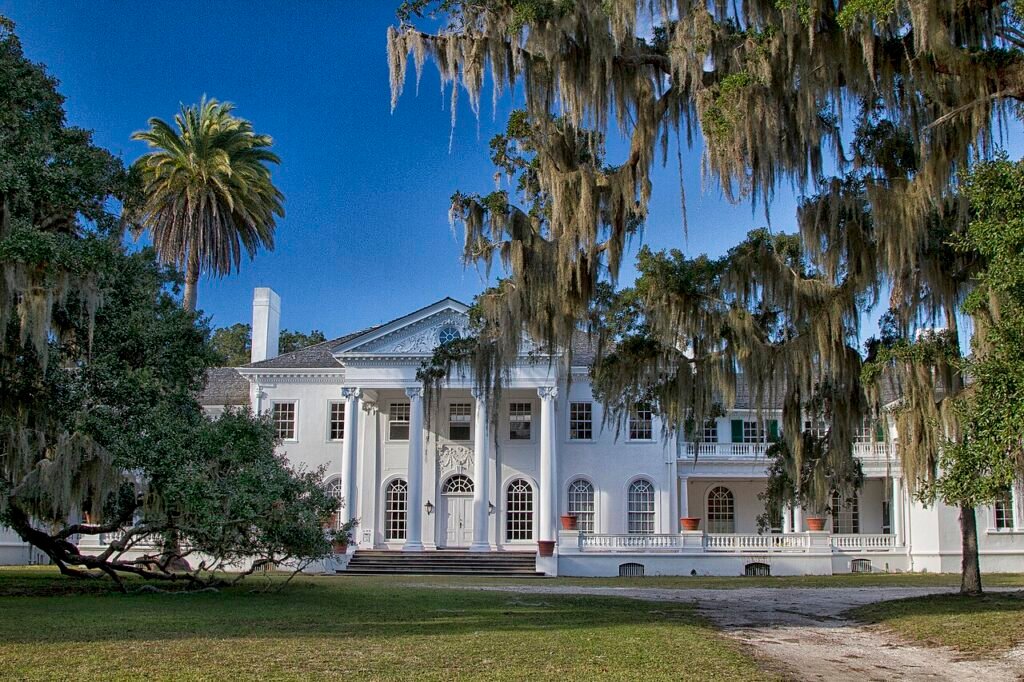
Image Credits: NPS Photo / U.S. National Park Service
That reversal is not a mood. It is a market.
Start with something most people have already noticed: quiet luxury. No logos, no branding, plain cashmere, unmarked cars, publicists whose job is to keep a name out of the press instead of in it. The easy read is that this is an aesthetic — a reaction to a decade of loud spending. It isn’t just an aesthetic. It’s a symptom of something structural.
Look at what wealthy families are actually paying for now. Homes bought through anonymous holding companies. Encrypted messaging by default. Private terminals instead of commercial ones. Paid services that scrub home addresses from data-broker databases. Non-disclosure agreements for household staff. And, increasingly, schools that ban the exact products their own parents built.
At the Waldorf School of the Peninsula, a school in Silicon Valley known for its low-tech approach, students spend their early years with little or no classroom technology. The contrast is striking: the school sits at the center of an industry whose business models depend on putting screens and software into nearly every part of modern life.
That isn’t hypocrisy. It’s information. The people who built the exposure economy are often the first to opt their own families out of it.
Here is the mechanism underneath it. Almost everything free on the internet is free because it’s funded by data rather than by users. Search, social feeds, maps, games — in each case, the product isn’t really the service, it’s the profile the service builds while you use it. That profile gets aggregated, resold, and combined with thousands of other data points by a vast data-broker industry that most people rarely see and rarely understand.
The default setting of modern life is exposure.
Privacy is no longer the baseline. It’s the exception you now have to build — and building it costs money.
Pew Research has tracked the public’s sense of this for years. As of its 2023 survey, 73% of Americans said they had little or no control over the data companies collect about them. Back in 2017, when the World Economic Forum asked a Davos audience whether a gap would open between “the privacy rich and the privacy poor” by 2025, 79% said yes. An online version of the same poll came back even higher, at 91%.
They were right. The gap opened. It just didn’t arrive as a debate. It arrived as a price list.
The luxury travel industry makes the shape of that price list visible. Affluent travelers increasingly seek private villas, secluded resorts and exclusive experiences that allow them to avoid crowds and public attention. The more valuable privacy becomes, the more the hospitality industry has learned to package and sell it.
This is where the tension sits. Privacy protection is supposed to be a right that applies to everyone equally. But a right only functions equally when the cost of exercising it is close to zero. In practice, opting out of data collection means dozens of hours spent filing manual removal requests, subscriptions to deletion services, migrating off free products onto paid alternatives, sometimes legal fees. None of that is free. The people with the least to lose from being profiled are usually the ones for whom ignoring privacy is cheapest. The people most exposed to the downside of being profiled — through insurance pricing, hiring algorithms, policing, credit decisions — are typically the ones who can least afford to opt out.
There’s a quieter version of this tension in Washington. The United States still lacks a comprehensive federal privacy law, while privacy advocates continue to push for stronger limits on the collection, sale and use of personal data.
The industry built on exposure is also the industry funding the absence of a law that would make exposure optional for everyone, not just the people who can buy their way out of it.
None of this is really about privacy specifically. It’s a pattern that keeps showing up wearing different outfits. Any resource that used to be the free, ambient default of daily life — clean air, quiet, unprocessed food, unscheduled time — tends to become a luxury good the moment an industry finds a way to profit from degrading it at scale. A second industry then emerges to sell the escape back, to whoever can afford it. Clean air was free until industrial output made it scarce, and now filtered air and private land get marketed as wellness. Quiet was free until dense cities and constant notifications made it rare, and now silence is sold as a retreat package. Attention was free until platforms learned to extract and resell it, and now “digital detox” is its own hospitality category. Privacy is following the identical arc: free, until an industry built a trillion-dollar model on removing it — at which point removing it back becomes something only some people can buy.
That mechanism doesn’t stay still. It compounds. AI-driven profiling and biometric identification are expanding faster than the regulation meant to contain them, which means the cost of opting out is more likely to rise than fall from here. If privacy keeps behaving like a market good instead of a protected one, it will eventually sit alongside healthcare and education as a resource whose quality depends heavily on what someone can pay — not because anyone designed it that way on purpose, but because that is simply what unregulated markets do to any resource once withholding it becomes profitable.
The real story isn’t that wealthy people want to disappear. It’s that disappearing has a price at all. Someday this moment may look the way unfiltered water or unregulated food safety looks in hindsight — not a lifestyle choice, but an early symptom of a system that hadn’t yet decided privacy was something everyone was owed.
Recommended Reading
- Why Big Tech Insider Threats Can’t Easily Break Systems From the Inside
- The Creator Economy Has Moved Beyond Hollywood.
- GTA 6 Isn’t Building a Game. It’s Building a Digital City.
- How Dior Became the Wedding Brand for the World’s Most Influential Women
- Why Countries Fight Over Rivers—and Why the Water Is Only Part of the Story
Receive Infrastructure of Thought
One thoughtful essay every week. No noise. No algorithms.
Just ideas worth your time.
By subscribing, you agree to our Terms of Use and Privacy Policy.
